



Out with 1936, In with What’s Next
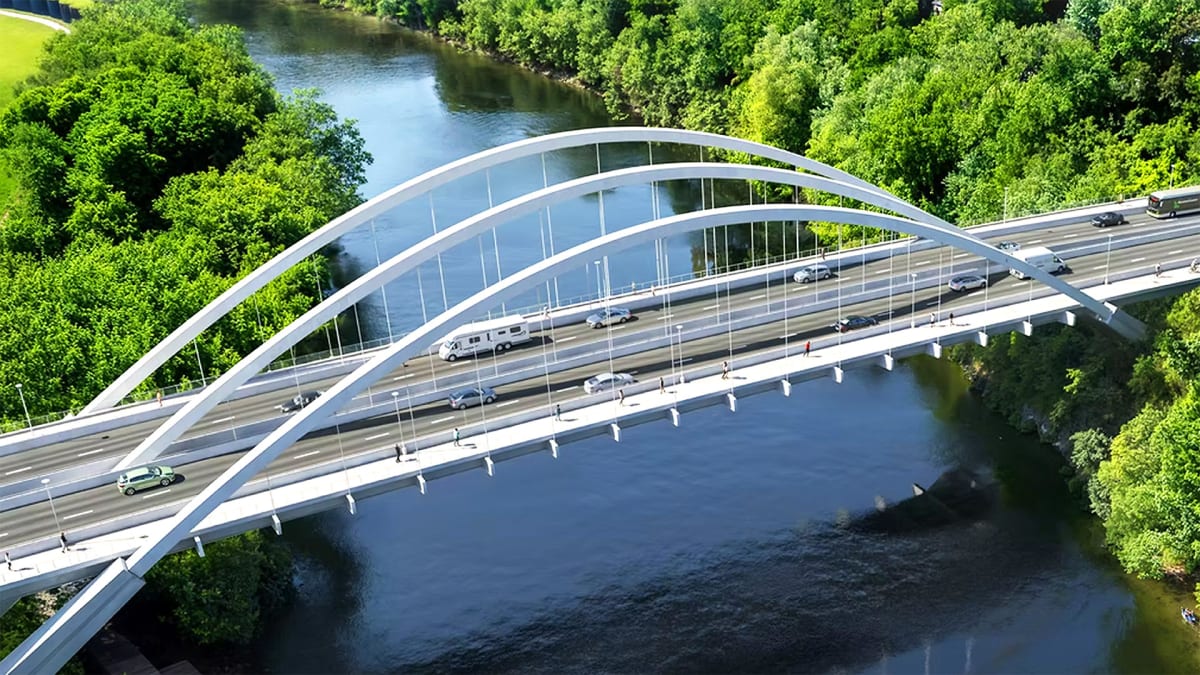
Northern Kentucky doesn’t tend to linger on nostalgia for long, and a recent moment along the Licking River made that clear in a very literal way. With a carefully orchestrated blast, the KY 8 Licking River Bridge that had linked Covington and Newport since 1936 officially stepped aside, making room for a new crossing built for how the region actually moves today.
State and local leaders, including Governor Andy Beshear, marked the demolition as more than a dramatic visual. It signals a broader shift in how Northern Kentucky is thinking about connectivity, access, and the pace of growth along the riverfront. The old bridge carried decades of daily traffic and quiet routines. The new one is being designed with intention.
Built For How People Actually Move
The replacement bridge is planned with four vehicle lanes, but that’s only part of the story. Dedicated pedestrian and bike paths will run alongside traffic, creating a safer and more practical option for people who move between the two cities without a car. That detail matters more than it might have a decade ago.
For businesses on both sides of the Licking River, easier movement translates into more consistent foot traffic, stronger cross-river visibility, and fewer barriers between customer bases that already overlap. Covington’s small business corridors and Newport’s entertainment and dining pockets are close enough to feel connected. This project turns that proximity into something more usable.
It also reinforces a pattern that has been building for years along Northern Kentucky’s riverfront. Investment is no longer just about attracting visitors, but about making everyday movement smoother for the people who live and work here.
What Happens While It’s Being Built
Construction projects always come with tradeoffs, but this one is trying to keep disruption from turning into disconnection. During the build, a free shuttle service will run for pedestrians and cyclists who rely on the crossing. It’s a small detail that signals a larger priority: keeping access intact while the long-term upgrade takes shape.
Here’s what that looks like in practice:
- Shuttle service fills the gap for foot and bike traffic during closure.
- Traffic planning is designed to keep nearby routes functional, not overwhelmed.
- Project phasing is structured to keep the timeline moving toward a summer 2028 opening.
That timeline matters. The controlled demolition wasn’t just about removing an aging structure; it was about accelerating what comes next.
Standing along the river now, the absence of the old bridge is noticeable, but so is the direction of travel. Northern Kentucky is clearing space for something more connected, more accessible, and better aligned with how people actually move between Covington and Newport every day.
Learn more about how Kentucky keeps things rolling at https://www.guidetokentucky.com/automotive-transportation.
