



A Billion-Dollar Spin Cycle
At Louisville’s Appliance Park, the spin cycle is becoming an economic strategy: one billion dollars, three retooled buildings, and a sizable bet that American laundry rooms can keep Kentucky production lines humming.
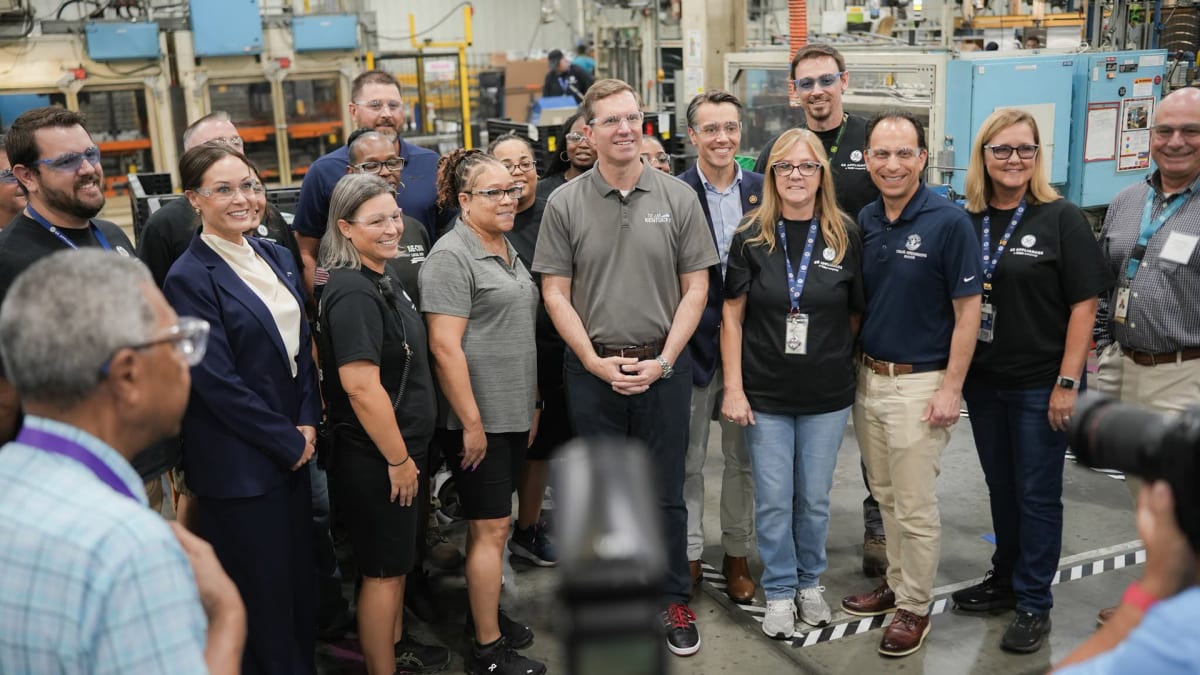
GE Appliances and IUE-CWA have jointly announced a sweeping transformation of the 750-acre campus, already home to more than 8,000 full-time employees across Appliance Park and a nearby call center. Once the investment is complete, the Louisville operation will stand as the country’s largest home appliance manufacturing site.
That title has some heft, but the machinery behind it matters more to Kentucky. Appliance Park houses manufacturing alongside engineering, industrial design, distribution and corporate operations. Expanding there means building upon a workforce and industrial network already in place, a less glamorous advantage than a ribbon cutting but considerably more useful on Monday morning.
Three Buildings, One Big Shift
More than $400 million will convert one building into a high-output dryer operation, moving production from Mexico to Louisville. Refrigerator production in that building is expected to end in early 2027, with dryer production beginning later that year.
Another roughly $112 million will upgrade washer and dryer manufacturing, including new equipment and redesigned production platforms. Meanwhile, a previously announced $490 million project will add front-load washers and combination washer-dryers beginning in 2027. Laundry, apparently, has become a capital-intensive business.
Workers affected by the retooling are expected to remain on the payroll during the transition, with no layoffs tied to the changes. That detail may lack the dazzle of a billion-dollar headline, but it carries considerably more weight around kitchen tables.
The Longer Manufacturing Game
The state’s announcement places the project within Kentucky’s recent run of more than $50.7 billion in announced private-sector investment and over 70,000 jobs connected to expansions and new locations since the Beshear administration began.
For local suppliers, skilled trades and logistics companies, the expansion could mean steadier demand and a stronger domestic supply chain. For Louisville, it reinforces the value of keeping a long-established employer interested in growing where it already knows the roads, the workforce and, presumably, which break-room vending machine behaves badly.
Appliance Park began production in 1953. Its next chapter suggests that old industrial ground can still carry new economic weight, especially when companies, workers and infrastructure are already pulling in the same direction.
Find more Kentucky manufacturers and industrial resources in the Guide to Kentucky manufacturing directory: https://www.guidetokentucky.com/manufacturing