



The Spin Cycle Goes High-Tech
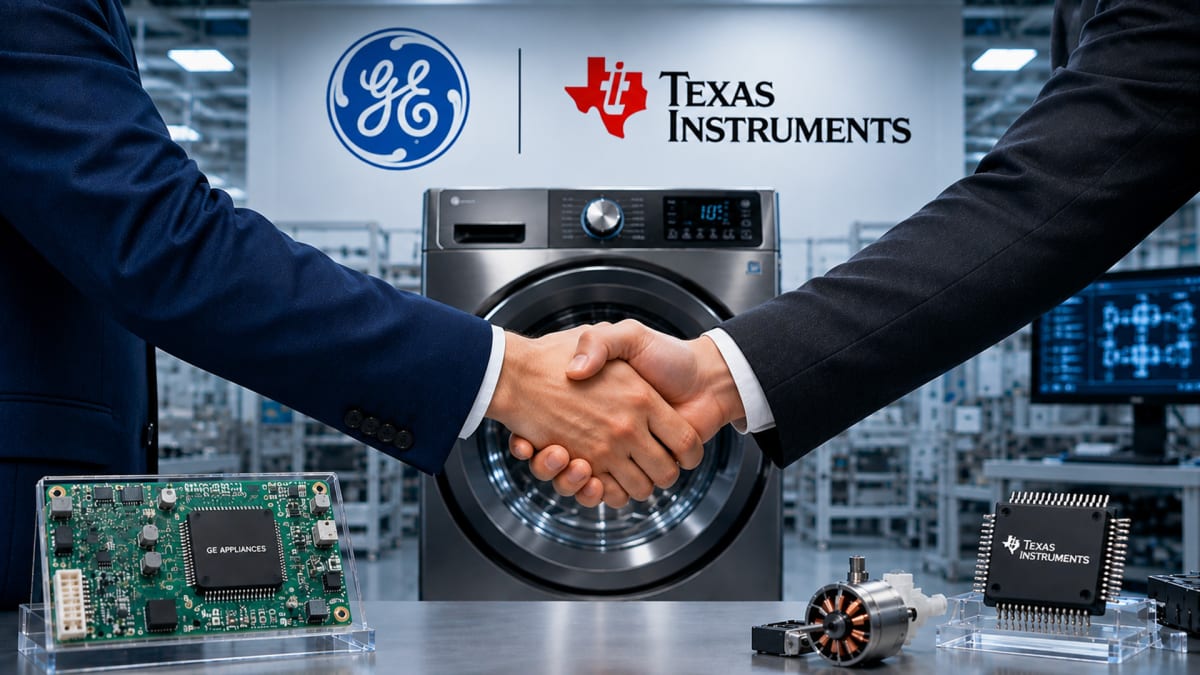
Louisville’s next generation of washing machines is getting a high-tech upgrade, with U.S.-made Texas Instruments chips headed into GE Appliances products built at the company’s new laundry plant beginning in 2027.
More Than a Smarter Washing Machine
Under a newly announced GE Appliances and Texas Instruments partnership, TI microcontrollers, Wi-Fi connectivity solutions and analog components will supply roughly one-third of the chips used in products manufactured at the Louisville facility.
For GE Appliances, headquartered in Louisville, the move nearly doubles its spending with TI and puts more U.S.-manufactured components inside appliances that will also be made domestically.
The chips may be tiny. Their job description is not.
Among the planned applications are more secure wireless connections, better power management and quieter drain-pump operation. Texas Instruments’ gallium nitride, or GaN, motor drivers can achieve greater than 99 percent efficiency while reducing the size of the motor-drive system.
GE Appliances is also exploring TI’s AI-capable intelligent microcontroller platform for future uses including predictive maintenance, adaptive performance algorithms and more precise load control. In practical terms, the familiar washer in the laundry room continues moving closer to something that can monitor, adjust and troubleshoot with considerably more sophistication than a simple spin-cycle dial.
Louisville Sits in the Middle of the Strategy
The semiconductor agreement builds on GE Appliances’ much larger $490 million Louisville laundry plant investment announced in 2025. The project is bringing production of more than 15 front-load washer models to Appliance Park, with new manufacturing lines expected to open in 2027 and 800 full-time jobs planned.
The plant will incorporate automation, robotics and advanced material-handling technology while manufacturing critical components in-house.
Now Texas Instruments adds another domestic link to that supply chain. Chips headed for Louisville will be manufactured at TI facilities in Lehi, Utah; Richardson, Texas; and Sherman, Texas.
That matters in a company supply network already spanning 6,500 U.S.-based suppliers. It also makes Louisville an interesting place to watch as traditional manufacturing becomes increasingly tied to semiconductors, software and connected technology.
A washing machine may still have one basic assignment: get the clothes clean. The machinery behind that assignment, however, is becoming a lot more complicated.
See more of the companies behind Kentucky’s manufacturing economy in the Guide to Kentucky directory at https://www.guidetokentucky.com/manufacturing.
